Can You Actually Raise Kids in a Tiny Home? Families Get Honest About What Works—and What Doesn't
Scroll through any tiny home hashtag and you'll find the highlight reel version of family tiny living: rosy-cheeked toddlers reading in custom loft nooks, homeschool sessions at fold-down tables, siblings who apparently never fight over anything. It's gorgeous. It's also incomplete.
Real families living tiny with kids will tell you a more layered story—one that includes genuine magic and genuine hard days in equal measure. We dug into both.
Who's Actually Doing This?
Tiny family living isn't as niche as it used to be. The American tiny home movement has expanded well beyond single millennials and retired couples. Young families are increasingly drawn to it for financial reasons (the cost of housing in most US metros is, to put it mildly, a lot), for environmental values, and for a lifestyle that prioritizes experiences over square footage.
The families making it work tend to share a few traits: they're intentional about space planning before they move in, they've had honest conversations with their kids about the trade-offs, and they've usually got access to outdoor space—a yard, a park, a trail—that effectively extends their living footprint.
The families who struggle? Often the ones who underestimated how much physical space growing children actually need, or who moved in without a clear organizational system and got buried in stuff.
What Child Development Experts Actually Say
This is where things get nuanced, and it's worth paying attention.
Child psychologists who've weighed in on alternative living situations generally agree that square footage alone isn't the determining factor in healthy child development. What matters more is the quality of interaction, the predictability of routine, access to outdoor and social environments, and whether children have some space they can call their own—even if it's small.
"Kids are remarkably adaptable," notes one developmental psychologist who works with families navigating non-traditional housing. "What they need is consistency, connection, and room to be themselves. That doesn't require 2,000 square feet."
That said, experts do flag some legitimate considerations:
Privacy increases in importance as kids age. A four-year-old doesn't need much private space. A twelve-year-old does. Families who plan to stay tiny long-term need to think ahead about how their floor plan accommodates adolescent privacy needs—separate sleeping areas, acoustic separation, and the ability to have a phone call without the whole family listening in.
Sensory needs vary by child. Kids with sensory processing differences, anxiety, or ADHD may find small shared spaces more challenging to regulate in. This isn't a dealbreaker, but it's something to assess honestly and discuss with your child's pediatrician or therapist before making the leap.
Social space matters. Children need to be able to have friends over. Families who make tiny living work long-term often have an outdoor area, a covered porch, or proximity to shared community spaces where kids can host without the whole house feeling like a sardine can.
The Storage Problem (And Creative Solutions)
Let's talk about stuff, because kids come with an almost supernatural amount of it.
Toys, sports equipment, school projects, art supplies, seasonal clothing in three sizes simultaneously—the logistics of managing children's belongings in a tiny home require a level of intentionality that most families don't practice in conventional housing.
Families who've cracked this tend to use a combination of strategies:
- Rotating toy systems: Only a portion of toys are accessible at any given time; the rest are in labeled bins in a shed, storage unit, or under-bed storage. Kids often actually engage more deeply with toys when there are fewer options available—this is backed up by child development research on play.
- One-in, one-out rules: Birthdays and holidays require a family conversation about what leaves when something new arrives. It sounds strict; kids who grow up with it often describe it as just... normal.
- Vertical everything: Loft beds, wall-mounted desks, pegboard organization systems, and floor-to-ceiling shelving can triple the functional storage in a small room.
- Outdoor gear lives outside: Bikes, scooters, sporting equipment, and seasonal items belong in a weatherproof outdoor storage unit, not inside.
The Surprising Benefits Families Don't Expect
Here's what doesn't make it into the skeptical think pieces: a lot of families report that tiny living genuinely improved their family dynamics in ways they didn't anticipate.
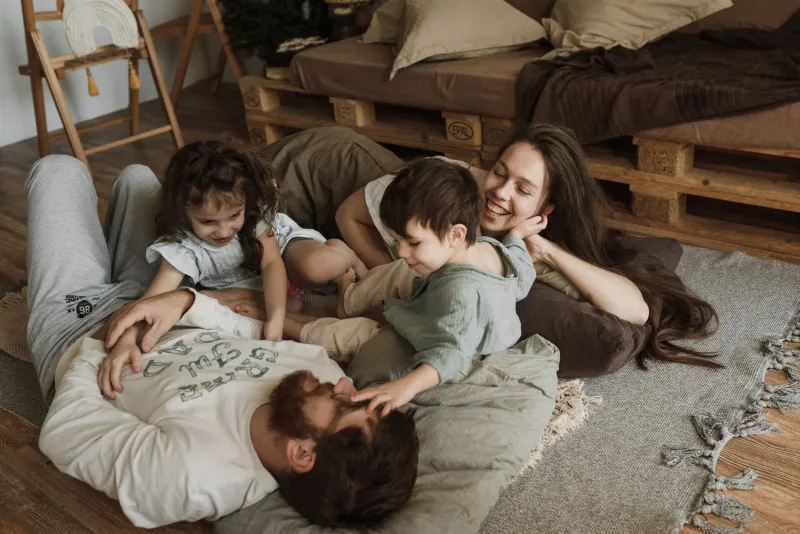
Less space means more proximity, which—when the family foundation is solid—translates to more connection. Parents report noticing more about their kids' moods and struggles. Siblings develop conflict resolution skills faster (necessity being the mother of invention). Family dinners happen more often simply because there's nowhere else to be.
The financial relief also matters in ways that ripple through family life. Families who've dramatically reduced housing costs often report less work-related stress, more flexibility for one parent to reduce hours, and more budget available for experiences—travel, camps, lessons—that enrich kids' lives in ways a bigger bedroom never could.
"We thought we were giving something up," one Colorado family of four told us after two years in their 480-square-foot home. "We actually gained time. We're just... around each other more. That turned out to be the point."
What to Think Through Before You Downsize with Kids
If you're seriously considering this move, here's the honest checklist:
- Involve your kids in the conversation early. Children who feel included in the decision—even when they don't love it—adapt far better than those who feel like it's happening to them.
- Visit a tiny home before committing. Spend a weekend in one with your actual family. The fantasy and the reality diverge quickly in small spaces.
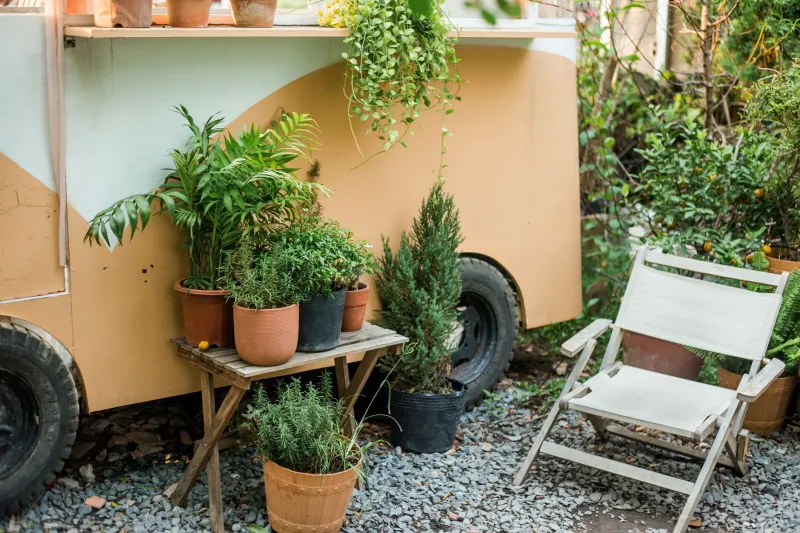
- Map out your outdoor access. A tiny home with a yard, a porch, or immediate trail access is a fundamentally different experience than one that's landlocked.
- Think five years ahead. Your kids are going to be different people. Does your floor plan work for who they'll be at their next developmental stage?
- Have the school conversation. Tiny home communities can be rural. Know your schooling plan—public, charter, homeschool—before you commit to a location.
The Real Verdict
Tiny living with kids isn't for every family. But it's working for more families than the skeptics would have you believe—and not just surviving, but genuinely thriving. The difference between the families who love it and the ones who bail usually comes down to preparation, flexibility, and a willingness to keep talking honestly about what's working and what isn't.
Small spaces can hold big lives. The key is building yours with your eyes open.