Cooking Without Compromise: Real Food Strategies for Kitchens Smaller Than Your Old Coat Closet
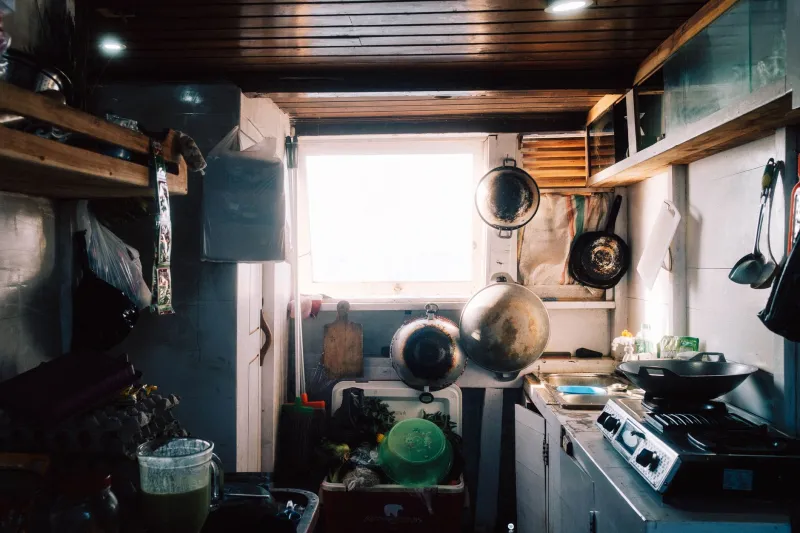
Let's get one thing out of the way immediately: the idea that tiny home living means surviving on protein bars and sad salad kits is complete nonsense. Walk into the right 200-square-foot home and you might find someone slow-braising short ribs, proofing sourdough, or whipping up a Sunday morning frittata that would embarrass your local brunch spot. The kitchen might be the size of a bathroom vanity, but the cooking happening inside it? Anything but small.
That said, there's a real paradox at the heart of the tiny kitchen experience. Food culture in America is enormous—celebrity chefs, cooking shows, farmers markets, the whole obsession. And yet the lifestyle that most loudly champions sustainability and intentional living often hands you a 40-inch galley kitchen and says, "Good luck." Bridging that gap takes creativity, some honest appliance math, and a willingness to rethink workflows you've had on autopilot since you moved out of your parents' house.
The First Thing You Have to Let Go Of
Before we talk gear and layout tricks, there's a mindset shift that every experienced tiny home cook mentions almost immediately: you cannot replicate your old kitchen. Not even close. And the sooner you stop trying, the faster you start actually cooking well.
Marcus, who's been living in a 180-square-foot park model in Asheville, NC for three years, put it bluntly: "I spent my first six months mourning my stand mixer and my six-burner range. Once I stopped comparing, I started figuring out what I actually needed versus what I just assumed I needed."
That distinction—need versus assumption—is everything. Most of us drag decades of kitchen conditioning into tiny spaces. We think we need four burners because we've always had four burners. We think we need a full-size oven because that's what ovens look like. Tiny kitchen mastery starts with questioning all of it.
The Appliance Audit: What Actually Earns Counter Space
Counter real estate in a tiny kitchen is basically Manhattan square footage—absurdly valuable and fiercely competed over. Every appliance has to justify its presence daily, not just on holidays.
Here's what experienced tiny home cooks consistently keep on the counter or within arm's reach:
An induction cooktop (two burners, max). This is probably the single most transformative piece of equipment for tiny kitchens. Induction is faster than gas, safer in small spaces, and the flat surface doubles as prep space when the burners are off. Two burners sounds limiting until you realize most weeknight meals only use two burners anyway.
A high-quality toaster oven or countertop convection oven. Brands like Breville have essentially made full-size ovens optional. The Breville Smart Oven Pro or the Cuisinart Chef's Convection can roast a chicken, bake a loaf of bread, and broil salmon without breaking a sweat. They heat up faster, use less energy, and don't turn your 200-square-foot home into a sauna.
An Instant Pot or similar multi-cooker. One appliance that pressure cooks, slow cooks, sautés, steams, and makes rice? In a tiny kitchen, that's not a luxury—that's load-bearing infrastructure. Many tiny home cooks have eliminated their slow cooker, rice cooker, and steamer basket entirely because of this one device.
What tends to get cut? Full-size blenders (an immersion blender handles 90% of the same jobs and stores in a drawer), dedicated toasters (the countertop oven does it), and the coffee gadget collection that somehow multiplied in your old kitchen. One great coffee setup—whether that's a Moka pot, an Aeropress, or a single-serve machine—and you're done.
Workflow Is Everything
Jenna, who built a custom 240-square-foot tiny home in the Texas Hill Country with her partner, is a former line cook. She'll tell you that small kitchens aren't that different from restaurant prep stations—they just require you to think in sequences rather than simultaneously.
"In a big kitchen, you can have five things going at once and just move between them," she says. "In a tiny kitchen, you prep, then you cook, then you plate. You work in stages. Once I started thinking like that, cooking actually got more efficient."
The practical translation: mise en place isn't just a French cooking term—it's a survival strategy. Chop everything before you turn on the burner. Clean as you go, because you physically cannot function in a tiny kitchen with dirty dishes piling up. Use a large cutting board that can sit over the sink to expand your prep surface when you need it.
Vertical storage changes everything, too. Magnetic knife strips, wall-mounted spice racks, and pot rails keep your limited counter space clear. A pegboard above the prep area can hold measuring cups, colanders, and small pans within reach without eating into drawer space.
The Refrigerator Reality
This is where people run into trouble they didn't anticipate. Most tiny homes come with compact or apartment-size refrigerators—typically 7 to 10 cubic feet versus the 20-plus cubic feet Americans are used to. That's a significant lifestyle adjustment if you're used to weekly Costco runs and freezer meal prepping.
The workaround most tiny home cooks land on: shop more frequently, buy less at once, and get comfortable with a smaller freezer footprint. Some folks add a small chest freezer in an exterior storage area or under a loft bed to compensate. It sounds annoying until you realize that shopping twice a week for fresh ingredients is actually how most of the world outside the US operates—and the food quality tends to be better for it.
Storage Without Losing Your Mind
The pantry situation in a tiny kitchen is, charitably, challenging. You're not fitting a year's worth of canned goods anywhere. What works instead is a curated, rotating pantry approach—keeping a tight inventory of staples you actually cook with and resisting the urge to stockpile "just in case" items that take up space for months.
Decanting dry goods into uniform, stackable containers (OXO makes a popular set that tiny home dwellers swear by) lets you maximize awkward cabinet space and see exactly what you have at a glance. Under-sink organizers, door-mounted racks, and pull-out cabinet inserts can double the usable storage in a tiny kitchen without any renovation.
The Unexpected Upside
Here's something the tiny kitchen experience teaches you that a sprawling gourmet kitchen never could: constraints make you a better cook. When you can only keep ten spices, you learn which ten actually matter to you. When you have two burners, you master timing. When every ingredient has to earn its place in a small fridge, you waste almost nothing.
Marcus, back in Asheville, says he cooks more adventurously now than he ever did in his old three-bedroom house with the kitchen he used to show off at parties. "I used to buy a bunch of stuff, half of it would go bad, and I'd order pizza anyway," he laughs. "Now I actually cook. Every night. Because I have to be intentional about it."
That might be the real tiny kitchen paradox. The space that seems like it should limit your cooking life has a funny way of deepening it instead.