Freezing and Broke: The Winter Heating Bills Tiny Home Owners Never Saw Coming
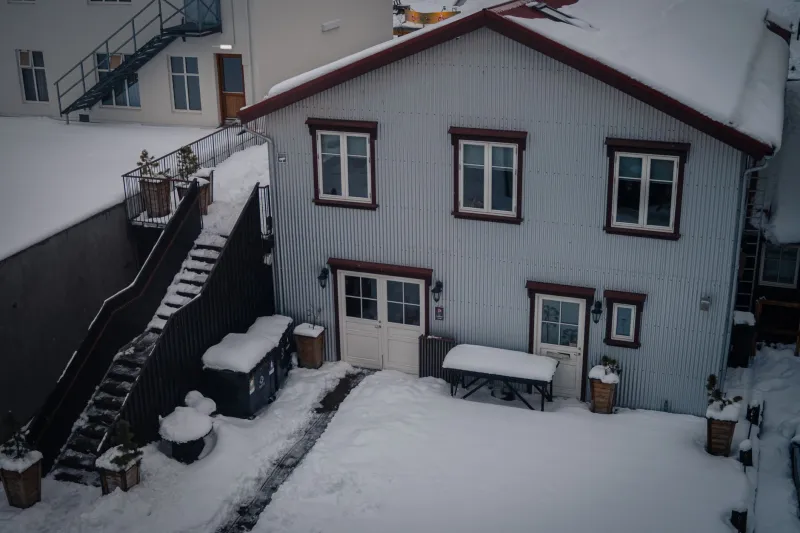
There's a sales pitch baked into the tiny home dream, and it goes something like this: smaller space equals smaller bills. You'll sip coffee by your little wood stove, wrapped in a blanket, watching snow fall outside while your utility costs stay gloriously, smugly low. It's a beautiful image. It's also, for a lot of tiny home owners, completely disconnected from reality.
Winter has a way of stress-testing every assumption you made when you bought or built your tiny home. And for thousands of owners across the US—from the Pacific Northwest to the Upper Midwest to New England—that stress test has come with a very uncomfortable price tag.
Why "Small Space" Doesn't Automatically Mean "Cheap to Heat"
Here's the counterintuitive truth: tiny homes often have a worse thermal envelope than conventionally built houses. A standard stick-built home has thick exterior walls, attic insulation, a basement buffer, and decades of building-code evolution behind it. Many tiny homes—especially trailer-mounted THOWs—have thin walls, minimal insulation depth, and a floor that sits directly above cold outside air with nothing underneath it.
That floor situation alone is brutal. In a traditional house, your foundation or basement creates a buffer zone. In a THOW parked on a gravel pad in January, cold air circulates freely beneath the structure, and your feet know it. Owners in colder climates often report that no matter how warm the air temperature gets inside, the floor stays cold enough to be miserable.
Wall thickness is the other killer. A 2x4 framed tiny home wall has maybe R-13 to R-15 insulation value. That's fine in San Diego. It's inadequate in Minnesota. And because surface area is proportionally high relative to total volume in a tiny home, you're losing heat through walls, ceiling, and floor at a rate that surprises most first-time owners.
The Per-Square-Foot Math That Hurts
Let's talk numbers, because this is where the sticker shock really hits.
A well-insulated 2,000-square-foot home in the Midwest might spend $150 a month heating in winter—roughly $0.075 per square foot. A 250-square-foot tiny home in the same climate, heated with a propane system or electric resistance heat, might spend $80 to $120 a month. Sounds cheaper in absolute terms, right? But that's $0.32 to $0.48 per square foot—four to six times the per-square-foot cost.
That math doesn't show up in the glossy tiny home guides. It shows up in your bank account in February.
Propane is particularly punishing. Rural and off-grid tiny home owners who rely on propane tanks are at the mercy of commodity pricing, and the winters of 2021 and 2022 reminded everyone how volatile that market can be. Owners who budgeted $60 a month found themselves paying $140 or more during cold snaps.
Heating System Showdown: What Actually Works
So what are your real options? Let's cut through the marketing and look at what tiny home owners are actually using—and what they're saying about it.
Mini-Split Heat Pumps This is the gold standard answer for most tiny home situations where grid power is available. A properly sized mini-split is efficient, quiet, and handles both heating and cooling. In mild to moderate climates (think the Southeast, Pacific Coast, or mid-Atlantic), they're excellent. The catch? Efficiency drops significantly once outdoor temps fall below 20°F. If you're in Wisconsin or Vermont, a mini-split alone may leave you shivering on the coldest nights unless you buy a cold-climate model—which costs more upfront, often $3,000 to $5,000 installed.
Propane or LP Gas Heaters Wall-mounted propane heaters like the Rinnai or Empire brands are popular in the tiny home community because they don't require electricity to operate and they heat fast. The problem is operating cost. Propane is expensive and getting more so. If you're in a climate that requires serious heating output for four or five months, your annual propane bill can easily hit $1,200 to $2,000.
Wood and Pellet Stoves Romantic? Yes. Practical? Complicated. A properly installed wood stove can be a fantastic primary heat source, but it requires a real chimney penetration (a structural challenge in a tiny home), regular wood supply and storage, and someone actually home to tend it. Pellet stoves are more automated but still need a power source and pellet storage. They also require regular maintenance that owners often underestimate.
Electric Resistance Heat This is what a lot of budget tiny homes end up with because it's cheap to install. It is not cheap to operate. Electric resistance heat—baseboard heaters, space heaters, electric wall units—converts electricity to heat at 100% efficiency, which sounds great until you realize a heat pump can deliver three to four times more heat energy per dollar spent. If you're on electric resistance heat in a cold climate, budget accordingly.
The Moisture Problem Nobody Talks About Enough
Heating a tiny home isn't just about temperature—it's about managing moisture, and this is where a lot of owners get blindsided.
When you heat a small, tightly sealed space, you're also creating a humidity differential. Human bodies, cooking, showers, even breathing add significant moisture to the air. In a tiny home with inadequate vapor barriers or ventilation, that moisture condenses inside wall cavities and on windows. Over time, you get mold. And mold in a tiny home isn't a minor inconvenience—it's a structural crisis.
The fix involves good mechanical ventilation (an HRV or ERV system is ideal), vapor barriers installed correctly during construction, and keeping interior humidity levels in check. These aren't free additions. An HRV system can run $800 to $2,000 installed, and it's not something most tiny home buyers think to ask about when they're shopping.
What to Do Before Next Winter Hits
If you're already in a tiny home and dreading the heating season, here's where to focus your energy:
- Audit your insulation first. Check your floor cavity, wall assemblies, and ceiling/roof. Adding rigid foam board insulation under a THOW can make a meaningful difference and is a DIY-friendly project.
- Seal every gap. Air sealing is cheap and high-impact. Caulk, weatherstripping, and spray foam around penetrations can reduce heat loss dramatically.
- Right-size your heating system. Oversized systems short-cycle and waste energy. Undersized systems run constantly and still can't keep up. Get a Manual J load calculation if you're investing in a new system.
- Add a backup heat source. Even if you have a primary system, having a secondary option—a small propane heater, a pellet stove—gives you resilience when your main system struggles.
Tiny living is still a genuinely compelling way to reduce your environmental footprint and your expenses. But winter has a way of exposing the gaps between the dream and the build. Go in with clear eyes, real numbers, and a heating plan that matches your actual climate—not the one in the brochure.