Built for You, Unsellable to Everyone Else: How Custom Tiny Homes Trap Their Owners
You spent eighteen months designing it. The loft is angled just right for your height. The built-in bookshelf holds exactly your collection. The composting toilet is tucked into a wet bath that works perfectly for your solo lifestyle. The kitchen is optimized for someone who bakes sourdough every weekend and needs zero counter space for anything else.
It's perfect. It is, genuinely, the most perfectly designed space you've ever occupied.
And now you need to sell it, and nobody wants it.
This is the custom tiny home trap—and it's catching more owners off guard than almost any other financial pitfall in the tiny living world. The very act of personalizing your tiny home to function beautifully for your specific life often makes it functionally useless for the next buyer. And in a market where the buyer pool is already small, "useless to most buyers" can mean "unsellable at any reasonable price."
Why Tiny Homes Are Especially Vulnerable to Over-Customization
In a conventional 2,000-square-foot house, a quirky custom feature—an unusual color choice, a converted garage, an oddly placed bathroom—is annoying but survivable. There's enough neutral space around it to absorb the eccentricity. Buyers can overlook one weird room.
In a 200-square-foot tiny home, there are no neutral spaces. Every design decision is load-bearing in the sense that it affects the entire living experience. A loft ceiling that's 4.5 feet tall because the original owner is 5'2" isn't a quirk—it's a dealbreaker for anyone taller. A wet bath that's 28 inches wide works for one body type and not for most others. A kitchen optimized for a single person who doesn't cook is a nightmare for a couple who does.
The math of small spaces means that personalization compounds. One custom choice forces another, and another, until the entire structure is a coherent system built for one very specific human—and incompatible with the range of humans who might otherwise want to buy it.
The Customizations That Kill Resale Value
Not all custom choices are equally damaging. Some modifications are relatively easy for a new buyer to reverse or adapt. Others are structural and essentially permanent. Here's where owners tend to get into trouble:
Non-standard loft dimensions. Loft sleeping areas are a signature feature of tiny homes, and they're also the most common source of resale problems. Lofts built very low (under 4 feet of clearance) or with access that's unusually steep or narrow limit the buyer pool to people with specific physical profiles. If you built your loft for how you access it, great—but the next buyer may find it genuinely unusable.
Single-person wet baths. A wet bath (where the shower, toilet, and sink share one small space) can be elegantly designed for solo living. It is often a dealbreaker for couples, families, and anyone with accessibility needs. If the bathroom is the bathroom and there's no room to expand it, this is a structural resale problem.
Hyper-specific built-ins. Built-in furniture is a smart space-saving strategy—until it's built around your specific dimensions, your specific hobbies, or your specific storage needs. A built-in desk that only works with a particular chair height, or a craft storage system that's meaningless to someone who doesn't craft, adds cost to the build and subtracts value at resale.
Unconventional layouts that violate buyer intuition. Most buyers, even in the tiny home market, have internalized certain expectations: the kitchen should feel like a kitchen, the sleeping area should feel separate, there should be some sense of flow through the space. Experimental layouts that subvert these expectations can be brilliant in practice but disorienting to buyers who are trying to visualize their lives in the space.
Off-grid systems that don't scale. A solar setup sized precisely for one person's power consumption, or a rainwater collection system that barely meets solo needs, signals to a buyer that they'd need to invest significantly to make the system work for them. That investment comes off your asking price.
What Actually Holds Its Value
Here's the good news: you don't have to build a generic box to protect your resale value. You just have to be strategic about where you personalize and where you don't.
Invest in quality, not quirk. High-quality windows, solid structural framing, premium insulation, a well-sized and properly installed mechanical system—these things appeal to every buyer regardless of taste. They also signal that the home was built with care, which matters enormously in a market where build quality varies wildly.
Keep the loft livable for a range of bodies. If you can design your sleeping loft with at least 4 feet of sitting clearance and a staircase (rather than a vertical ladder), you've kept the door open for a much wider buyer pool. Stairs with built-in storage are both functional and broadly appealing.
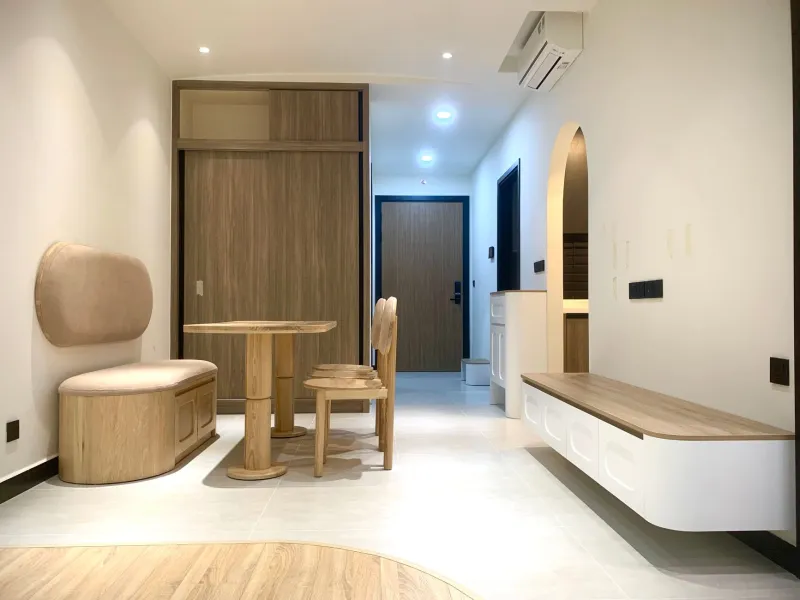
Leave wall space flexible. Rather than building fixed furniture into every surface, consider freestanding pieces that can be removed. Or build in only the most universally useful items—a built-in dining bench with storage underneath, for instance, is something almost any buyer can use.
Standard utility connections. A home that can connect to shore power, city water, and sewer—even if you choose to live off-grid—is dramatically more sellable than one that can only function in off-grid mode. Optionality is value.
Neutral finishes in structural elements. You can express your personality through decor, textiles, and removable fixtures. Express it in paint, not in tile. Express it in art, not in cabinetry. The things that are easy to change don't hurt resale. The things that require a contractor do.
The Harder Conversation: Permits and Legal Status
Here's where this becomes a Regulations & Permitting issue as much as a design one: a significant number of heavily customized tiny homes were built without permits, or were built to a standard that doesn't meet any recognized building code. When it's time to sell, that legal ambiguity can be as damaging as any design choice.
Buyers who want financing—even alternative financing—generally need a structure that can be assessed, insured, and legally classified. A custom tiny home with no permit history, no RVIA certification (for THOWs), and no clear legal status is a cash-only sale to a very narrow buyer pool. That dramatically suppresses your price.
If you're building custom, build to a standard that can be documented and verified. Get the RVIA certification if it's a THOW. Work with your county to understand permitting options if it's a permanent structure. The paperwork feels tedious when you're deep in the creative excitement of building your dream home. It feels like salvation when you're trying to sell it.
Building Personal Without Building Yourself Into a Corner
The tiny home you build should feel like yours—that's the whole point. But the most financially resilient tiny homes are built with a dual vision: optimized for the owner's life and adaptable enough that the next person can see themselves in it.
Think of it like writing a great short story. The best ones feel personal and specific, but they resonate with a wide audience because the specificity is in the details, not the structure. Your tiny home can have your personality in its finishes, its colors, its art. But its bones—its layout, its mechanical systems, its loft clearance, its bathroom—should speak to more people than just you.
Build smart. Build personal. Just leave a little room for the next chapter.