The Dark Side of Tiny Home Communities: Neighbor Drama Nobody Warned You About
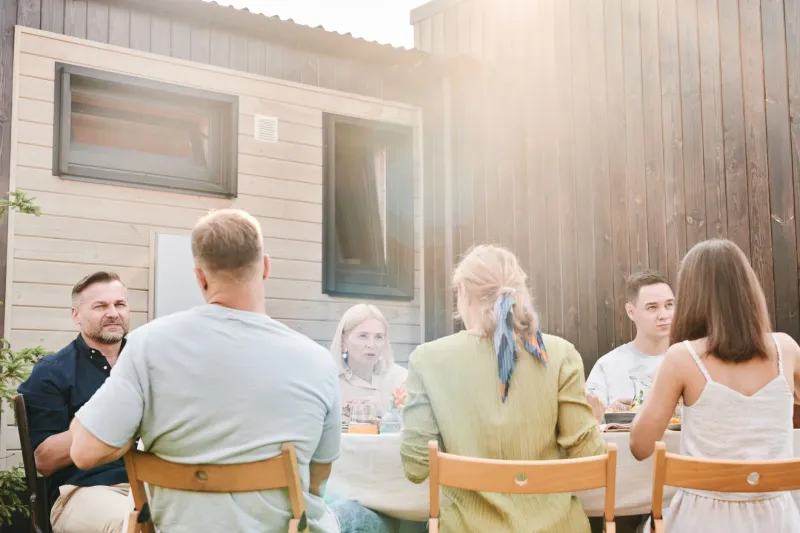
Scroll through any tiny home community's Instagram page and you'll see the same curated fantasy: string lights, communal dinners, smiling neighbors with rescue dogs. What you won't see is the passive-aggressive note left on someone's door about their generator running after 9 PM. Or the parking dispute that turned into a six-month cold war. Or the couple who had to leave a community they loved because one difficult neighbor made their daily life unbearable.
Conflict in tiny home communities is real, it's common, and it's almost never discussed in the spaces where tiny living is being sold as a lifestyle upgrade. Let's change that.
Why Tiny Home Communities Are Conflict Hotbeds
This isn't a knock on the people who choose tiny living—it's a structural reality. When you compress living spaces and reduce the physical distance between neighbors, you amplify everything. Noise travels further. Shared infrastructure creates shared frustrations. Boundary lines—literal and figurative—become flashpoints.
In a conventional suburban neighborhood, your neighbor's late-night music is annoying. In a tiny home community where your bedroom wall is 15 feet from their living room, it's a crisis. The same logic applies to dogs barking, kids playing, smoke from cooking fires, and the particular neighbor who decides 7 AM on a Saturday is a great time to run their table saw.
There's also an ideological dimension that's specific to tiny home communities. Many of these spaces attract people who hold strong opinions about sustainability, resource sharing, and community norms. Strong opinions, held strongly, in close quarters, by people who all think they're the reasonable one—that's a recipe for friction.
The Most Common Conflicts (And Why They Escalate)
Noise This is the number one complaint in virtually every tiny home community. Thin walls, small lots, and outdoor living spaces mean sound carries constantly. The conflict isn't always about volume—it's about timing, frequency, and the feeling that your neighbor doesn't respect your space. And because tiny home communities often lack formal noise ordinances (especially if they're on private land), there's no neutral authority to appeal to.
Parking and Access Shared driveways and limited parking are a feature of many tiny home communities, and they become a source of daily irritation fast. Who parks where, who blocks who, who has guests over on weekends—these seem like small things until they happen every single day.
Shared Resource Disputes Communal gardens, shared laundry facilities, common outdoor spaces—these are selling points for community living. They're also breeding grounds for resentment when contributions feel unequal. The person who never weeds the garden but always harvests the tomatoes. The neighbor who leaves their laundry in the machine for 18 hours. The person who monopolizes the fire pit area every Friday night.
Value Clashes This one is subtler but often more damaging. Tiny home communities attract people for different reasons—some are there for environmental values, some for financial necessity, some for the social appeal, some for off-grid independence. When those motivations clash, you get conflict that isn't really about the garbage bins or the parking—it's about fundamentally different visions of what the community is supposed to be.
How to Vet a Community Before You Commit
The best time to avoid community conflict is before you move in. Here's what to look for:
Ask about governance structure. Does the community have formal rules? How are disputes handled? Is there a residents' association, a community manager, or a landlord? Communities with no formal conflict resolution process are communities where disputes fester.
Visit at different times. A Saturday afternoon visit tells you one story. A Tuesday night visit tells you another. Talk to residents informally—not during a scheduled tour—and ask directly: "What's the hardest part of living here?" The answers will be revealing.
Look for how shared spaces are maintained. A neglected communal garden, a trash area that's overflowing, equipment that's broken and unrepaired—these are signals about collective responsibility culture. If nobody's taking care of shared stuff, nobody's going to take care of shared problems either.
Ask about turnover. High resident turnover in a tiny home community is a red flag. People don't leave communities they love. Find out how long current residents have been there, and if there's been significant turnover, find out why.
Review any community agreements in writing. Legitimate communities will have written rules about noise, guests, parking, shared resources, and dispute resolution. If everything is informal and based on "we're all cool here," that's not a community—it's a vibe, and vibes don't hold up under pressure.
De-escalation Strategies That Actually Work
If you're already in a conflict situation, here's the honest truth: most interpersonal disputes in tight communities get worse when they're ignored and better when they're addressed early and directly.
Go in person, not in writing. A note on the door or a text message is easy to misread and easy to dismiss. A calm, face-to-face conversation is harder to ignore and harder to misinterpret. Lead with curiosity, not accusation. "Hey, I wanted to check in about something" lands differently than "You need to stop."
Focus on impact, not character. "The generator noise makes it hard for me to sleep" is a conversation opener. "You're so inconsiderate" is a fight starter. Keep the focus on specific behaviors and their specific effects on you.
Bring in a neutral third party early. If direct conversation hasn't worked after one or two attempts, don't let it fester—escalate to whatever formal structure the community has. Many communities have access to community mediation services, and some municipalities offer free or low-cost mediation for neighbor disputes.
Document everything. If a conflict is serious enough that you think it might eventually involve a landlord, property owner, or legal action, start keeping records. Dates, times, what happened, what was said. You may never need it. You'll be glad you have it if you do.
When It's Time to Leave
Sometimes a community conflict doesn't resolve—it just continues until someone leaves. If you've tried direct communication, formal mediation, and community governance processes, and the situation is still affecting your mental health and daily wellbeing, it may be time to exit.
This isn't failure. One of the genuine advantages of tiny home living—especially in a THOW—is mobility. You can move. And sometimes the healthiest, most self-respecting thing you can do is recognize that a particular community isn't the right fit and take your home somewhere better.
The tiny home movement is built on the idea that you can design a life that actually fits you. That includes your neighborhood. Don't let a bad community situation convince you that tiny living itself is the problem—sometimes it's just this particular zip code, and the next one will be different.