When Nobody Comes Over Anymore: The Social Fallout of Tiny Living and How to Win Your People Back
You made the leap. You sold the stuff, ditched the mortgage, and moved into a home that finally feels like yours. Life is lighter. Your bank account is breathing. And then, somewhere around month three, you notice something quietly uncomfortable: your phone has gone a little too quiet.
Friends stop suggesting your place for game night. Family holiday gatherings default to someone else's house — every single time. People say they'll "come see the tiny home soon" in the same tone they use for the gym membership they never use. And before long, you're doing all the visiting. You're always the one who shows up at other people's doors.
This isn't just a logistical inconvenience. It's a real social phenomenon, and it's one of the least-talked-about emotional costs of tiny living.
Why Tiny Homes Create Hosting Anxiety — For Everyone
Here's the thing nobody tells you upfront: hospitality is deeply woven into American social culture. Inviting someone into your home is an act of trust, warmth, and belonging. When that becomes complicated — or worse, embarrassing — people stop doing it. Both sides of the equation start avoiding the situation altogether.
For tiny home owners, the anxiety is practical. Where does everyone sit? What do you do with coats and bags? Can the bathroom handle four people cycling through it over a three-hour dinner? Is it weird that your guests can literally see your bed from the front door?
For guests, the anxiety is different but equally real. They don't want to impose. They don't want to make you feel cramped. They're not sure of the etiquette. So they make excuses, and eventually the invitations just... stop coming.
Psychologists call this kind of gradual social withdrawal "passive avoidance" — nobody makes a conscious decision to drift, but the friction of an awkward situation slowly erodes the habit of connection. Over time, out of sight really does mean out of mind.
The Friendship Fallout Is Real, But It's Not Inevitable
Before you spiral, know this: plenty of tiny home owners have cracked the code on maintaining rich, active social lives without a dining room table that seats eight. The solution isn't a bigger house. It's a smarter approach to how and where you connect.
Talk to people who've been doing this for a few years and a clear pattern emerges. The ones who thrive socially stopped trying to replicate the hosting model of their old lives and started building something new.
"I used to feel this weird shame about my space," says one tiny home dweller from outside Asheville, North Carolina, who's been living in a 320-square-foot cabin for four years. "Once I let go of the idea that I had to host the way my parents hosted, everything changed. Now I throw the best backyard potlucks in the neighborhood."
That word — backyard — is doing a lot of heavy lifting. And it points to one of the most effective mindset shifts in tiny living social culture.
Think Beyond Your Four Walls
The most socially successful tiny home owners treat their entire environment as their living space, not just the square footage under their roof. Your outdoor space, your neighborhood, your community — these are extensions of your home, and leaning into them hard is one of the smartest moves you can make.
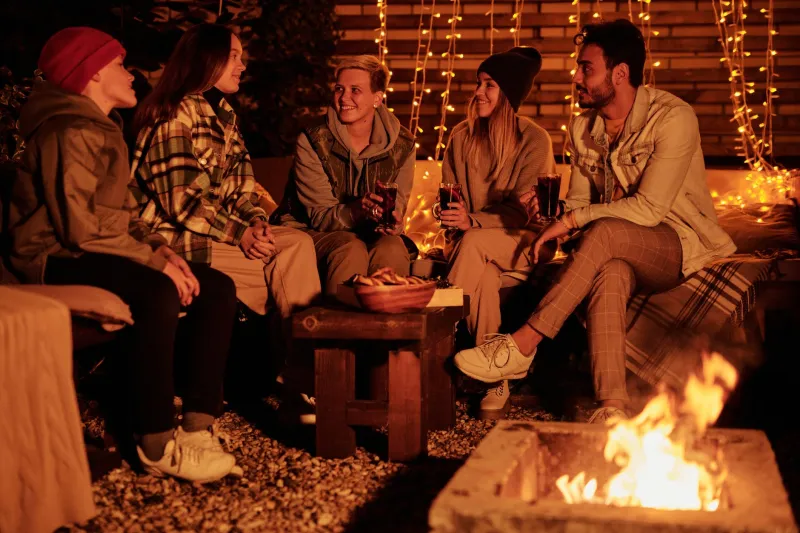
If you have any outdoor space at all, invest in it. A decent fire pit costs less than $200 at any Home Depot or Tractor Supply. String lights, a few weather-resistant chairs, and a small folding table can transform even a modest patch of yard into a genuinely inviting gathering spot. Americans love outdoor entertaining — lean into that cultural sweet spot and your space limitations become almost irrelevant.
No yard? Get strategic about third places. Claim a regular table at a neighborhood coffee shop. Become a regular at a local park. Find the BYOB restaurant nearby that doesn't mind if your group lingers. Your home doesn't have to be the hub of your social life — it just has to stop being a barrier to it.
Design Moves That Actually Help
If you're still in the planning or building phase, or you're open to some interior reconfiguration, there are legitimate design strategies that make small spaces feel more hospitable.
Flexible seating is everything. A built-in bench along one wall with hidden storage underneath can seat three or four people without eating up floor space. Pair it with a drop-leaf table that folds flat against the wall when not in use, and you've got a functional dining setup that disappears when you need the room back.
Create visual breathing room. Mirrors, lighter color palettes, and good lighting don't add square footage, but they genuinely change how a space feels to someone walking in for the first time. A cramped-feeling room discourages lingering. A bright, airy-feeling room — even a small one — invites people to settle in.
Designate a "guest zone." Even in a tiny home, carving out a psychological corner of the space that feels like it's for visitors matters. A Murphy bed, a lofted sleeping nook with a curtain, or even a quality air mattress stored in a bench seat sends the message that you thought about your guests. That intentionality goes a long way.
Rethink the bathroom situation. If you're on a foundation, even a small outdoor shower or composting toilet setup can take pressure off your single indoor bathroom during gatherings. If you're on wheels, be honest with yourself about capacity — and plan your guest list accordingly.
Reframe What Hosting Actually Means
Here's the deeper truth: the best social lives aren't built around square footage. They're built around intention, consistency, and the willingness to show up — which, ironically, tiny living often teaches you better than a big house ever could.
When you can't default to the big dinner party, you get creative. You host one friend at a time for a slower, more meaningful evening. You start a monthly outdoor movie night with the neighbors. You become the person who organizes the block party or the hiking meetup or the community garden workday.
Tiny living, done right, doesn't shrink your world. It pushes you out into it.
The friends worth keeping will figure out how to meet you where you are. And the ones who only showed up when there was a spare bedroom and a full kitchen? Maybe the tiny home was just doing you a favor by showing you who they actually were.
Your space is small. Your life doesn't have to be.