The Hidden Enemy Inside Your Walls: How Moisture Is Quietly Destroying Tiny Homes
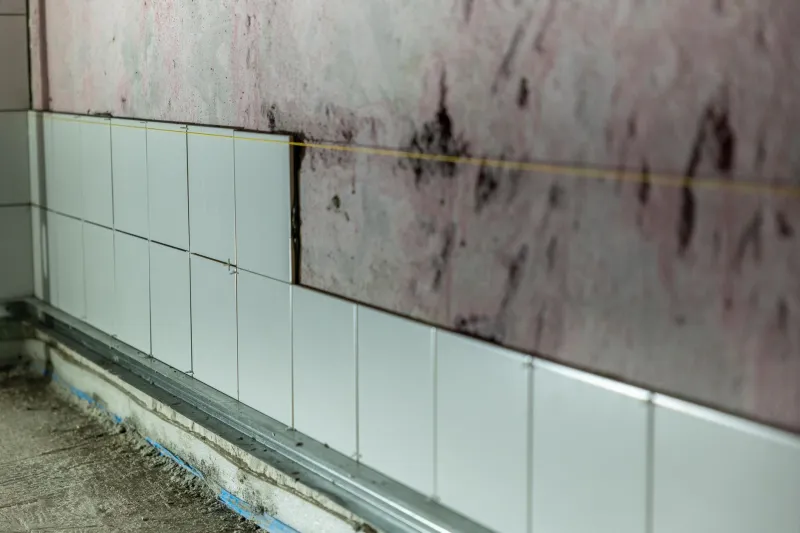
You notice it first as a faint musty smell. Then the windows start sweating every morning. Then one day you pull back a corner of wall panel to fix something unrelated, and there it is: black fuzz spreading across the insulation like something out of a horror movie.
Moisture damage is one of the most common—and most underreported—problems in tiny home living. And the reason it's so underreported is that by the time most owners realize what's happening, it's already expensive to fix.
Why Tiny Homes Are Especially Vulnerable
Here's a basic fact about physics that matters a lot when you live in 200 square feet: every activity you do inside your home releases moisture into the air. Breathing. Cooking. Showering. Even just existing. In a 2,000-square-foot home, that moisture disperses across a large volume of air and gets carried out through a ventilation system designed for the space. In a tiny home, you're releasing the same amount of moisture into a fraction of the air volume.
The result is relative humidity levels that climb fast and stay high. And when warm, humid interior air meets a cool surface—an exterior wall, a window, a metal roof panel—it condenses. That condensation soaks into materials, and if it can't dry out quickly enough, mold follows.
This isn't a flaw in tiny home design theory. It's a physics problem that requires active, thoughtful management. The issue is that a lot of tiny home builders—especially smaller operations and DIY builders—treat ventilation as an afterthought rather than a core structural priority.
The Warning Signs You Shouldn't Ignore
Moisture problems in tiny homes often show up in ways that are easy to dismiss until they're not.
Persistent window condensation is usually the first sign. A little condensation on a cold morning is normal. Condensation that doesn't clear by mid-morning, or that appears on interior surfaces, is a red flag.
Musty or earthy odors that come and go depending on the weather are a classic early signal of mold growth somewhere you can't see. Mold in wall cavities often doesn't smell strongly until humidity levels spike.
Soft spots or bubbling in wall panels or flooring indicate that moisture has penetrated into structural materials. In a tiny home, this can progress quickly because the structural members are often smaller and more vulnerable than those in conventionally framed homes.
Rust streaks or staining around window frames, roof penetrations, or metal fixtures can indicate chronic moisture intrusion at those junctions.
Unexplained respiratory symptoms—persistent coughing, congestion, or fatigue that improves when you leave the home—are a serious warning that should prompt an immediate inspection. Mold exposure affects air quality in ways that are magnified in a small, sealed space.
Where Conventional Ventilation Fails in Small Spaces
Many tiny homes are built using ventilation strategies borrowed from conventional construction: a bathroom exhaust fan, a range hood, maybe an HRV (heat recovery ventilator) if the builder is thoughtful. In a full-size home, this is often adequate. In a tiny home, it frequently isn't—and here's why.
First, the ratio of moisture-generating activities to air volume is dramatically higher. A couple cooking dinner in a 180-square-foot home is producing the same steam and vapor as they would in a 1,500-square-foot kitchen, but there's nowhere near the air volume to absorb it.
Second, tiny homes—especially those built for energy efficiency—tend to be very tightly sealed. That's great for heating costs and terrible for moisture management. A tight building envelope traps humidity inside unless there's a dedicated, controlled ventilation strategy to exchange it.
Third, many tiny home bathroom exhaust fans are undersized or improperly ducted. In a conventional home, a slightly undersized bath fan is a minor inefficiency. In a tiny home, it can be the difference between healthy air and a mold problem inside six months.
The Science of Getting It Right
Building scientists and tiny home experts who've studied this problem point to a few non-negotiable principles for moisture management in compact spaces.
Continuous ventilation matters more than intermittent ventilation. Running an exhaust fan while you shower isn't enough. Tiny homes need mechanical ventilation systems—ideally an ERV (energy recovery ventilator) or HRV—that run continuously at a low rate, constantly exchanging stale, humid interior air for fresh exterior air while recovering heat energy in the process.
Vapor barriers need to be correctly placed for your climate. This is a nuanced building science issue that many DIY builders get wrong. In a cold climate, the vapor barrier belongs on the warm interior side of the insulation. In a hot, humid climate like the Southeast, the logic can actually reverse. Getting this wrong traps moisture inside your walls regardless of how good your ventilation is.
Thermal bridging creates condensation hotspots. Metal framing, improperly insulated roof connections, and window frame junctions can be dramatically colder than surrounding surfaces, becoming magnets for condensation. Good tiny home builders address this in the design phase. Retrofitting a solution after the fact is difficult and expensive.
Cooking and showering ventilation needs to be direct and powerful. A range hood that vents to the interior (recirculating type) does essentially nothing for moisture. It needs to vent directly outside. Same with bathroom ventilation—the duct needs to exit the building envelope, not just terminate in an attic or crawl space.
What Owners Can Do Right Now
If you're already living in a tiny home and worried about moisture, there are practical steps you can take without a full renovation.
Invest in a quality hygrometer and monitor your indoor relative humidity. You want to keep it between 30% and 50%. If you're consistently above 60%, you have a problem that needs addressing.
Run a dehumidifier during high-humidity seasons, especially if your mechanical ventilation is limited. Size it appropriately for your space—a unit rated for 1,500 square feet is overkill and expensive to run; a 30-pint unit is often sufficient for a tiny home.
Develop habits around ventilation. Open a window when cooking. Run your bath fan for at least 20 minutes after every shower. Don't hang wet laundry inside to dry without ventilating.
If you suspect existing mold, don't just paint over it or seal it. Have it properly remediated. In a tiny home, mold in the wall cavity affects your air quality in ways that are much more immediate than in a larger structure.
Moisture is the enemy that moves in quietly and costs a fortune to evict. The good news is that it's a solvable problem—but only if you take it seriously before the damage shows up in places you can't ignore.